
- Favorites Review and save your favorite vehicles.
- Sign In Find used cars for sale near you at Enterprise Car Sales. Shop online or visit a dealership, value your trade, apply for financing, & schedule a test drive.
- My Account Find your account information, including favorite vehicles, notification and communication preferences for Enterprise Car Sales.
- Help & Resources Have questions about buying a used car? Browse Enterprise Car Sales' FAQs to find answers about the used car buying process, financing, car delivery, and more.
- Our Locations Find Enterprise Car Sales locations near you by entering your ZIP code, selecting your state, or using your location.
Horsepower vs. torque: What’s the difference?
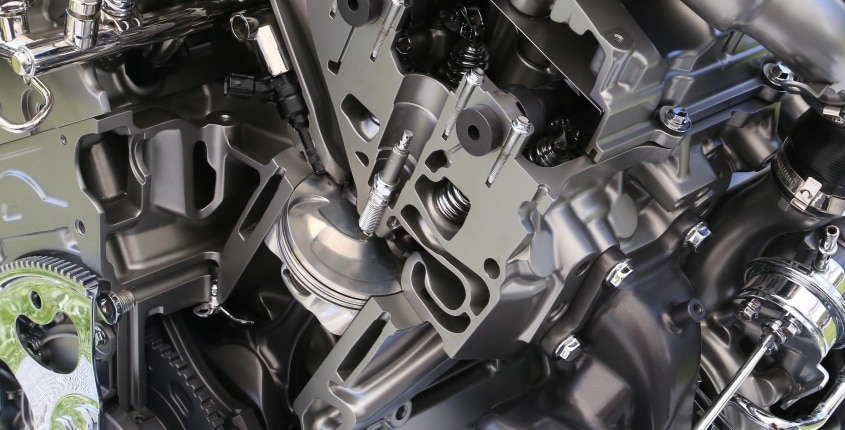
Horsepower and torque relate to the power and performance of a vehicle. It’s a good idea to learn a little about both to help when shopping for your next used car, SUV or van.
Key Takeaways
- Horsepower measures an engine's ability to maintain high speeds. It's the power that keeps your car moving fast.
- Torque is the rotational force that gets your car moving from a standstill. It's responsible for that initial "push-you-back-in-your-seat" feeling.
- Vehicles with high torque, like diesel trucks and electric cars, excel at towing, hauling and quick initial acceleration.
- Vehicles with high horsepower, such as sports cars, are built to achieve and sustain high top speeds.
What’s the difference between horsepower and torque?
Horsepower and torque both describe how a car performs, but they measure very different things. One isn’t necessarily better than the other, though your driving habits can influence which of the two you prioritize when shopping for your next vehicle. Put simply, torque is the low-end strength that gets you going and horsepower is the high-end performance that keeps you going.
What is torque?
Torque measures the power that an engine or motor can produce to get your vehicle moving from a standstill. It’s the engine’s twisting force, measured in pound-feet (lb-ft) or Newton-meters (Nm). It’s what vehicles need to:
- Move from a standstill
- Climb hills
- Tow heavy loads
A vehicle with more torque will often feel faster and more powerful when accelerating from zero than an equally sized vehicle with less torque.
Why does torque matter for towing?
Torque is the force that can move a heavy, stationary object. When you're towing a large trailer or hauling a heavy payload, you need a lot of twisting force to get the combined weight of your vehicle and the load moving. An engine with high torque can handle this task easily, providing smooth and controlled power, especially when starting on a hill or accelerating to merge with traffic.
Which vehicles have the most torque?
If you are looking for a vehicle with excellent torque, diesel engines and electric motors are typically great choices.
Diesel Engines
Typically found only in pickup trucks and some SUVs, diesel engines often have lower horsepower but higher torque, allowing them to efficiently tow heavy trailers when compared to a conventional gasoline engine. While diesel trucks may not be the fastest accelerating vehicles, they more than make up for it with their impressive hauling and towing capabilities.
Electric Vehicles (EVs)
Electric vehicles also have higher torque than most similar-sized gasoline-powered vehicles. Their instant-on power delivery means torque is available immediately without needing to “rev up” an engine. This gives electric vehicles excellent acceleration and responsiveness, especially at lower speeds. Hybrid vehicles with electric motors also benefit from this instant-on torque.
What is horsepower?
If torque is the force, horsepower (hp) is the rate at which that force is applied, helping the vehicle to achieve and maintain high speeds. It measures the maximum amount of power an engine or electric motor can produce at a particular speed in revolutions per minute or rpm (for example, 280 hp at 6,000 rpm). As the speed of an engine increases, the horsepower increases until it reaches its limit.
Peak horsepower is typically not achieved unless the engine or motor is at a higher rpm. This means horsepower doesn’t contribute much when gaining speed from a stationary position. Instead, it determines:
- Acceleration at higher speeds
- How quickly a vehicle can overtake another
- Overall top-end performance
Is more horsepower always better?
Not necessarily. While a high horsepower number might sound impressive, whether it’s the best choice for you depends on your driving style. If you do most of your driving in the city where you encounter a lot of stop-and-go traffic, your engine’s maximum horsepower probably won’t make much difference in your day-to-day — you'll rarely use it. If, on the other hand, much of your driving happens on the highway, you’re more likely to enjoy the benefits of a higher horsepower engine that’s more responsive at speed.
How torque and horsepower work with a vehicle’s transmission
Torque and horsepower are equally important, and the transmission is the component that manages how each is used. It balances both by selecting the right gear for the current conditions in a perfectly engineered partnership that allows a vehicle to perform smoothly across everything from city traffic to open highways.
Finding the right balance between torque and horsepower
Torque and horsepower vary between engines mainly because of differences in engine size, design and operating speed.
- Larger engines (or engines with a longer stroke, like diesels) produce more torque because with each combustion, more force is exerted on the crankshaft.
- Smaller or high‑revving engines often make less torque but can reach much higher RPM, which boosts horsepower.
- Other design factors, like intake airflow, valve timing, compression ratio and turbocharger size (if equipped) can also influence where an engine makes its power.
- Some engines are tuned to breathe well at low RPM for more torque, while others are built to flow air efficiently at high RPM for more horsepower.
Manufacturers design engines based on the vehicle’s purpose.
- Trucks and off‑road vehicles prioritize torque, which provides pulling power, low-speed control and the ability to move heavy loads.
- Sports cars and performance vehicles prioritize horsepower, delivering strong acceleration at high speeds and better top-end performance.
How to decide between more torque or higher horsepower
When shopping for a vehicle, consider how you will use it most often.
- For city commuters: A vehicle with a good amount of torque will feel quick and responsive in stop-and-go traffic. Many modern turbocharged gasoline engines, hybrids and EVs are excellent choices.
- For highway drivers: If you spend most of your time on the open road, a vehicle with a healthy horsepower rating will make merging and passing effortless and comfortable.
- For towing and hauling: You'll want higher torque. A diesel or powerful gasoline V8 truck or SUV is your best bet to handle heavy loads.
- For performance enthusiasts: Look for a vehicle that offers a strong balance of both — often a sports car or a performance crossover or sedan — with high horsepower for top-end speed and ample torque for thrilling acceleration.
By understanding the difference between horsepower and torque, you can choose a vehicle with performance characteristics that truly match your lifestyle.
