
- Favorites Review and save your favorite vehicles.
- Sign In Find used cars for sale near you at Enterprise Car Sales. Shop online or visit a dealership, value your trade, apply for financing, & schedule a test drive.
- My Account Find your account information, including favorite vehicles, notification and communication preferences for Enterprise Car Sales.
- Help & Resources Have questions about buying a used car? Browse Enterprise Car Sales' FAQs to find answers about the used car buying process, financing, car delivery, and more.
- Our Locations Find Enterprise Car Sales locations near you by entering your ZIP code, selecting your state, or using your location.
Enterprise Certified®: What it is and why it matters when buying a used car
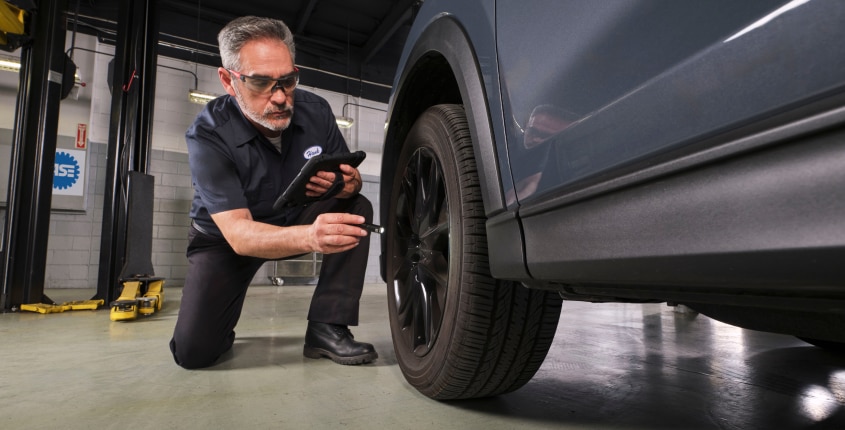
Buying a car is a big decision. You want something that looks good, is dependable, reasonably priced and ready for real life — not just a quick test drive. Beyond what you can see and feel for yourself, a used car’s condition can be a mystery if you’re not mechanically inclined. So how can you be sure you’re headed toward a vehicle purchase you won’t regret a few months down the road?
That’s where our certification process comes in. If you’ve ever wished you could bring a trusted mechanic along as you shop for your next reliable used car or certified used vehicle, knowing the ins and outs of what it takes to become Enterprise Certified can help give you confidence that you’re making a smart decision.
Key Takeaways
- Vehicles that are Enterprise Certified* have undergone rigorous inspection by ASE-certified technicians.
- The Enterprise Car Sales certification process includes a comprehensive inspection of the vehicle inside and out, including mechanical systems, cosmetic details, comfort and convenience features, and more.
- Enterprise Certified vehicles are backed by a 12-month/12,000 mile limited powertrain warranty3 and 1 year of roadside assistance4.
What makes a used car Enterprise Certified?
You may have seen phrases like “certified used car” or “dealer certified” before, but what those titles mean can vary based on who’s using them. At Enterprise Car Sales, we rely on technicians certified by the National Institute for Automotive Service Excellence (ASE) to conduct a thorough mechanical inspection on every vehicle we sell.
Service professionals who receive ASE certification have proven their knowledge, experience and technical skills through the organization’s comprehensive testing program and must retest every five years to ensure they’re up to date with the ever-changing technologies found in today’s vehicles.
What gets checked during the Enterprise Car Sales vehicle inspection process?
Every vehicle sold at Enterprise Car Sales has gone through our detailed inspection, inside and out. Any that don’t make the cut don't get sent to our dealerships.
Before a vehicle can be certified, we ensure it has a clean title and review any open safety recalls. Then our technicians methodically test and inspect each of the systems listed below, making any repairs or replacements as needed. Only once it’s passed all inspection and reconditioning steps can the vehicle receive official Enterprise Certified status.
1. Cosmetic Details
When it comes to your next car, looks matter. That’s why our inspection process includes checking the vehicle’s cleanliness and looking for damage.
The technician reviews the vehicle’s:
- Paint and panel condition
- Panel alignment
- Body trim and moldings
- Bumpers
- Headliner
- Dashboard
- All glass surfaces
- Seating
- Carpeted areas
- Weather stripping
2. Driving Experience
No inspection would be complete without a test drive. As they go, the technician will:
- Listen for abnormal squeaks, rattles or other noises that may hint at something wrong
- Test driver-assist features such as blind spot detection and lane departure warnings, if available
- Check the dash panel to ensure things like the fuel gauge, compass and other features are accurately functioning
- Monitor the odometer and try out the trip meter to make sure both are in good working order
- Test the turn signals and hazard lights to verify proper operation
- Ensure the engine starts smoothly, checking idle and sound quality, and acceleration
- Check the transmission for shift performance and interlock, and drivetrain operation including all-wheel drive and 4-wheel drive functions when applicable
- Watch for possible alignment issues such as drifting or pulling to one side
- Inspect steering wheel alignment to ensure it's centered and easy to turn
- Get an initial feel for brake function, checking anti-lock brakes and ensuring stops are smooth
- Test out cruise control to make sure it’s working correctly
- Ensure the backup camera functions properly
- Check HVAC performance and climate controls, testing fan speed, recirculation and defrost capabilities
- Try out the windshield wipers, including rear wipers (if it has them)
- Make sure mirrors are intact and working as they should
3. Common Maintenance
During the inspection, the technician will address the following as needed:
- Changing engine oil and replacing the filter
- Applying lubricant to the chassis
- Inspecting all hoses, clamps, chains, drive and serpentine belts or chains
- Checking the condition of the wiper blades and replacing if necessary
- Inspecting the car’s air and cabin filters (if equipped), and replacing if their condition calls for it
- Checking the battery’s voltage, tray, retainer and vent tubes, making sure connections are clean and secure
- Noting any warning lights that would call for further inspection and repair, such as:
- Air bags
- Check engine
- Antilock brake system (ABS)
- Traction control
- Tire pressure monitoring system (TPMS)
- Checking and topping off windshield, power steering, transmission and brake fluids, as well as coolant level
4. Exterior Lighting
Safety can depend on your vehicle’s lighting systems, so the technician will make sure all the below are functioning properly:
- Headlights, high and low beams (including checking that they’re aimed correctly)
- Directional signal lights, or turn signals
- Parking lights
- License plate light
- Hazard lights
- Reverse lights
- Taillights
- Brake lights
5. Tires and Wheels
The technician will inspect the vehicle’s tires, ensuring they have more than 4/32” tread, aren’t damaged, and that they’ve been filled to the correct PSI according to manufacturer specs. The technician will verify tires are the correct size with a speed rating and load range that meets manufacturer recommendations. They’ll also look for wear, determine whether the tires need rotation, and check all wheel lugs and torque.
6. Brake Systems
The car’s brakes are thoroughly inspected for condition and performance, including:
- Verifying both front and rear brakes have at least 50% lining remaining and that wear is even
- Inspecting rotors for grooves and pits, measuring thickness to ensure it adheres to manufacturer's specs, and cleaning the surface to remove dust and dirt
- Checking that calipers are working properly
- Inspecting drums to ensure their inside diameter aligns with manufacturer requirements, and cleaning the surface
- Ensuring brake line condition is good and that fittings are free of leaks
- Testing parking brake operation
7. Under the Vehicle
With so many critical parts and systems found on the vehicle’s underside, the technician will conduct a thorough inspection to verify safety and performance. They’ll review the vehicle’s:
- Steering system
- Control arms
- Rack and pinion
- Springs and sway bars
- Shock absorbers, struts and suspension
- Transmission mounts, seals and gaskets
- CV joints and boots
- Axles
- Differentials
- Driveshaft and universal joints
- Transfer case (for 4x4 vehicles)
- Oil pan
- Exhaust system, including hangers and muffler
- Fuel tank
- Frame and unibody
- Cooling system, radiator condition, condenser and fan
- Active grille shutter
- Engine mounts, seals and gaskets
- Ignition system
- Alternator and starter
- AC compressor and refrigerant lines
- Fuel system
8. Inside the Vehicle
As a driver, you’ll spend most of your time in the cabin of your vehicle – and there’s more to the interior than comfort and convenience. The technician will inspect each of the following (where applicable) for condition and to ensure everything is working as it should:
- Power seats
- Sun visors and lights
- Storage compartments
- Courtesy lights
- The car’s horn
- Review mirrors
- Cup holders
- Trunk covers
- Accessory outlets
- Seat belts
- Infotainment systems functions such as navigation, radio, video equipment, Bluetooth® connection and CD player
- Power mirrors
- Power windows
- Convertible top
- Sunroof/moonroof and sunshade
- Power doors, sliding doors and hatches
- Door and child safety locks
- Steering wheel functions including tilt, telescoping and touch controls
- Hood, trunk and fuel latch releases
- Spare tire, jack and tool kit or inflation device
9. State Inspections & Verification
Finally, state safety and emissions inspections are completed, as required by applicable law.
What happens after the vehicle inspection is complete?
Once any necessary repairs and reconditioning have been taken care of, the vehicle earns its Enterprise Certified status.
Do Enterprise Certified used vehicles come with a warranty?
Many of the vehicles we sell are only 1-3 years old, which means, depending on mileage and other conditions, they may still be covered under their original manufacturer’s warranty. Regardless, when you purchase a car from Enterprise Car Sales, your vehicle is backed by our 7-day buyback policy2 should you change your mind, as well as 12 months of roadside assistance4 and our 12-month/12,000-mile limited powertrain warranty.3
For added peace of mind, we also offer a number of optional protection products, including Enterprise Mechanical Repair, Windshield and Tire & Wheel protections.
Find the perfect vehicle for you
Whether you prefer to browse our inventory online, stop by one of our many dealerships in person or a mixture of both, our friendly, knowledgeable sales consultants are here to help.
Enterprise Certified Used Cars FAQs
Enterprise Certified vehicles go through a rigorous inspection, are backed by our 12-month/12,000-mile limited powertrain warranty3 and 7-day buyback policy,2 and come with a vehicle history report and 12 months of roadside assistance.4
Certified Pre-Owned (CPO) vehicles are brand-specific and go through a certification process that is dictated by the manufacturer. They are often accompanied with a manufacturer’s warranty. Enterprise Certified used vehicles have been inspected and certified to meet our high quality standards and come with our 12-month/12,000 mile limited powertrain warranty.3 Some Enterprise Certified vehicles may also still be covered by their original factory warranties.
If you value quality and reliability, then yes, buying a certified used vehicle is worth it. Knowing the car you’re purchasing has passed through a thorough inspection and reconditioning process can give you added peace of mind versus buying a vehicle that’s condition may be untested and unknown.
Yes! Enterprise Car Sales works with a network of lenders to provide car buyers with access to competitive financing options.
Because Enterprise Certified vehicles have been thoroughly inspected and reconditioned before sale, they can be a good choice for:
- Commuters looking for long‑term reliability
- Families needing safe, dependable transportation
- Budget-conscious shoppers looking to avoid paying high new‑car prices
- Buyers seeking fuel‑efficient sedans, reliable SUVs, or affordable used trucks
Many of the vehicles you’ll find available at your local Enterprise Car Sales dealership have come from our rental operations, which means they’ve been consistently monitored and maintained.
*Enterprise Certified is a different designation than a manufacturer’s Certified Preowned.
2 7-Day Buyback Promise: For a period of 7 days after the date of purchase or 1,000 miles beyond the odometer reading at purchase, whichever comes first, the vehicle may be returned for the exact price originally paid minus a $200 restocking fee (as allowed by law). Restrictions apply. Contact a Sales Consultant for details.
3 12 Mo / 12,000 Mi Powertrain Warranty: Limited Powertrain Warranty begins on the vehicle purchase date & extends for 12 months or 12,000 miles, whichever comes first. Coverage runs concurrently with manufacturer warranty. Restrictions apply. See a Sales Consultant for details.
4 Roadside Assistance: Enterprise 12-Month Unlimited Mileage Roadside Assistance Package is provided by RESPONSE, a Florida Entity. Some limitations & restrictions apply.