
- Favorites Review and save your favorite vehicles.
- Sign In Find used cars for sale near you at Enterprise Car Sales. Shop online or visit a dealership, value your trade, apply for financing, & schedule a test drive.
- My Account Find your account information, including favorite vehicles, notification and communication preferences for Enterprise Car Sales.
- Help & Resources Have questions about buying a used car? Browse Enterprise Car Sales' FAQs to find answers about the used car buying process, financing, car delivery, and more.
- Our Locations Find Enterprise Car Sales locations near you by entering your ZIP code, selecting your state, or using your location.
Keyless Ignition: What it is and how it works
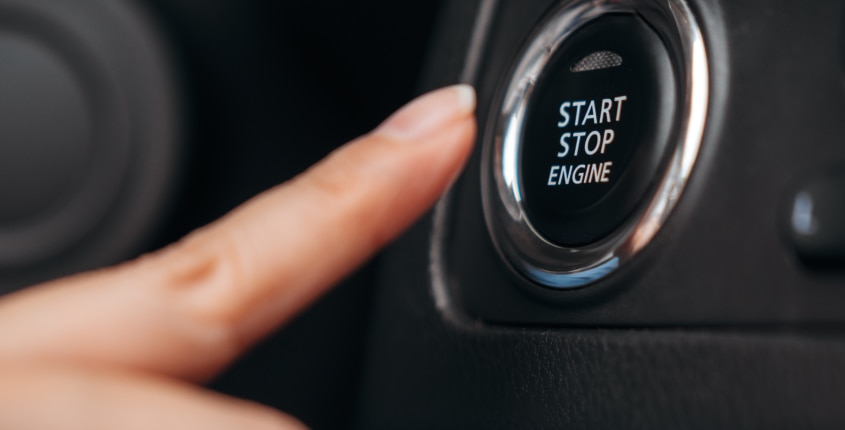
If you’ve ever balanced a toddler on one hip and groceries on the other, all while fumbling for your car key, a keyless ignition system may be a feature you’d want in your next vehicle.
Luckily, many cars today come equipped with the convenience — often paired with keyless entry and possibly digital key capabilities — because it simplifies a driver’s routine in ways that make it faster and easier to get on the road.
And keyless ignition (sometimes called a push-button start or smart key system), isn’t just about tech for tech’s sake. These systems ease the daily drive so families, commuters and anyone with a busy schedule can move through the day with one less hassle.
Let’s break down these technologies, how they work and what to know before deciding if keyless ignition is right for your next vehicle.
What is keyless ignition?
Keyless ignition lets you start your vehicle without inserting a traditional metal key. Instead, a small key fob communicates with the vehicle when it’s within a certain range. If the fob is inside the cabin, all it takes is the press of a button to start the engine.
In many modern vehicles, that same fob may also allow you to unlock the doors in a similar manner.
A quick way to think about it:
- Keyless entry unlocks the car’s doors as you approach or with just a touch of the handle.
- Keyless ignition allows you to start the engine (usually with the press of a button) without touching a key.
- Passive key systems let you do both without requiring that you get the fob out of your pocket or bag.
- Digital keys give you the power to unlock, start and lock your vehicle using only your phone.
How does keyless ignition work?
Every key fob contains a tiny radio transmitter called an RFID (radio-frequency identification) or low‑frequency proximity sensor. When you press the start button, your vehicle sends out a signal searching for that specific fob. If it’s within the required range, usually inside the cabin, the engine will start.
Components of a keyless ignition system
There’s a lot happening behind the scenes to start your vehicle without a standard key. Some elements that make it all possible include:
- Smart Key Fob – Contains a transmitter that allows the vehicle to recognize the driver
- Proximity Antennas/Sensors – Located in the cabin for keyless start, also in door handles if equipped with keyless entry
- Start/Stop Button – Replaces the ignition cylinder where you would have inserted a traditional key
- Immobilizer – Keeps the engine from starting without authentication
- Brake or Clutch Sensor – Ensures safe, intentional engine startup by checking that the driver is pressing the brake (for automatic transmissions) or clutch (for manual transmissions)
How do you start a car with keyless ignition?
The key fob has a unique encrypted code that matches your vehicle and only starts if the code in the key fob matches the one assigned to the car. The system is designed to quickly and seamlessly recognize you and enable the vehicle, like a quiet handshake between the car and its fob that happens in a split second.
1. Standard push‑button start
This is the most common and easiest method:
- Enter the vehicle with your key fob
- Press the brake pedal (or clutch for manual vehicles)
- Press the Start/Stop button
The key fob only needs to be inside the cabin to start the engine.
2. Starting the car when the key fob battery is dead
Most keyless ignition systems have a backup detection method you can use if the battery dies in your key fob. The method will vary by make and model — check the owner’s manual or manufacturer’s website to find yours — but here are some common ones:
- Use the key fob to press the start button directly
- Use a backup slot (often located in the console or under a rubber pad)
- Hold the fob near a specific receiver point, such as:
- Start button
- Steering column
- Cup holder
The vehicle can read the fob even without battery power due to NFC (near‑field communication) backup technology.
3. Remote engine start (if equipped)
Some vehicles allow you to start the engine from outside the vehicle using:
- A button combination on the fob
- The manufacturer’s mobile app
- Smart home integrations
How to turn off a car with keyless ignition
For the most part, turning off your car with keyless ignition is a lot like turning it off with a classic key. You stop, shift into park, then instead of turning and removing the key you simply press the Start/Stop button.
In emergency situations such as if the electronics malfunction or the engine must be stopped immediately, many manufacturers include a safety mechanism. Check your owner’s manual or the manufacturer’s website to learn more.
One thing to note: without the habit of turning and removing a physical key, it can be easier to forget to turn off the engine or even put the car in Park — especially if your vehicle has a quiet engine. Some cars will automatically shift into Park on their own or warn you if you exit the vehicle.
How to lock and secure your keyless-ignition vehicle
Oftentimes your keyless ignition system will also include keyless entry features, though not always. If equipped, some common methods of locking and unlocking the vehicle include:
1. Touch‑sensitive handles
Depending on the vehicle, you’ll need to touch a small button or anywhere on the handle to lock or unlock the car doors.
2. Automatic walk‑away locking
Some vehicles offer auto locking capabilities that activate when you walk away with the key. When the doors are closed and the fob (safely stowed in your pocket or bag) is taken outside a preset range, the locks are automatically activated.
3. Locking with the fob
For vehicles that don’t feature a keyless entry method, locking and unlocking the doors can typically be done using a button on the fob.
What is a digital key and how does it work?
Picture this: you’re running behind and if you don’t leave now you’ll be late for an important appointment. You’re headed out the door when you realize your key isn’t where you thought it was. With a traditional car key or key fob, you’re stuck until you find it, but with a digital key all you need is your mobile device.
Depending on the make, model and year of your vehicle, a digital key:
- Allows you to unlock and start your vehicle — no fob required.
- Works via an app that when set up, pairs your phone to your vehicle so you can use it in place of your fob.
- Is as simple as tapping or holding your phone near the door, or in some cases, just having it in your pocket.
Adding to the convenience factor, some digital keys allow you to share your key with someone you trust, giving them the ability to unlock, start and lock your vehicle even when you (and your phone) aren’t around. This can come in handy in situations like if your car is parked behind a family member’s and you’re not home to move it yourself.
Important things to know about keyless ignition systems
Like any feature, keyless ignition comes with a few considerations
- You’re relying on the key fob battery
If the battery gets too low, the vehicle may not recognize it. Many cars will give you a warning ahead of time, and fob batteries are inexpensive and easy to replace.
If your key fob battery does die, most cars have a backup method for entry and to start the vehicle. There is often a physical key nestled inside the fob to unlock the door and a designated spot (typically near the start button) where you can hold the dead key fob so the car can read the code and start the engine.
- Keep your key fob close
Replacing a lost key fob can be expensive because it contains specialized electronics and often costs more to replace than a standard key. That’s why it’s important to keep your key fob in a safe place and make a habit of bringing it with you whenever you exit your vehicle.
Leaving a fob inside the car can allow anyone to start and drive your vehicle, and forgetting it, especially if your car is an EV with a quiet engine, means you could unintentionally leave the car running. To avoid these risks, get into the routine of confirming your vehicle is turned off and storing your key fob in a consistent, protected spot.
- Protect your phone when using a digital key
While it can be incredibly convenient to simply hold your phone near the door to unlock your car, if your phone is lost or stolen, it could mean you’re giving access to anyone who finds it. While some systems require the phone to be unlocked to use the key, others allow you access to your vehicle even when the device is locked.
If you’re prone to misplacing your phone or simply want the added security, you may be able to adjust the app’s settings to require the device to be unlocked before using the digital key. Then, of course, it’s important to have a secure passcode, facial or fingerprint recognition in place so only you have access.
- Always have a charger on hand
Though some digital key systems will allow you to unlock and start your car for a time even after your phone’s battery has died, if you’ve set up your key to require your device be unlocked, it won’t work if you can’t turn it on.
Carrying a charging block or cord as a backup can give you peace of mind without having to sacrifice the security of a passcode.
The bottom line
Ultimately, choosing a vehicle with keyless ignition, keyless entry or digital key capabilities can offer convenience and easy access to simplify your day. While they come with a little added responsibility, like keeping track of a fob, monitoring battery life or making sure your phone is secure, many drivers enjoy how much easier these keyless options make it to get in the car and on your way.

Keyless Ignition FAQs
Usually, if the engine is running, the car will continue to operate, allowing you to drive even if you don’t have the fob. However, once you stop and shut off the vehicle, you will not be able to start it again until the fob is in range.
Usually there’s a backup method you can use to start your vehicle if the fob is dead. Check your owner’s manual or manufacturer’s website for specific instructions for your car. Some common methods include:
- Backup start slot – an area in the vehicle where you insert the dead fob allowing the vehicle to read the transponder chip at close range.
- Touch‑to‑start method – the vehicle can be started by using the fob itself to press the start button.
- Emergency NFC reader area – a specific area in the car that you can touch your fob to in order to start the vehicle.
That will depend on the car. Many modern vehicles will not lock if the fob is detected inside the cabin to prevent you from accidentally locking it inside.
Depending on your vehicle’s make and model, you may be able to disable passive entry features using the infotainment system or via the manufacturer’s app.