
- Favorites Review and save your favorite vehicles.
- Sign In Find used cars for sale near you at Enterprise Car Sales. Shop online or visit a dealership, value your trade, apply for financing, & schedule a test drive.
- My Account Find your account information, including favorite vehicles, notification and communication preferences for Enterprise Car Sales.
- Help & Resources Have questions about buying a used car? Browse Enterprise Car Sales' FAQs to find answers about the used car buying process, financing, car delivery, and more.
- Our Locations Find Enterprise Car Sales locations near you by entering your ZIP code, selecting your state, or using your location.
AWD vs. 4WD: Which do you need?
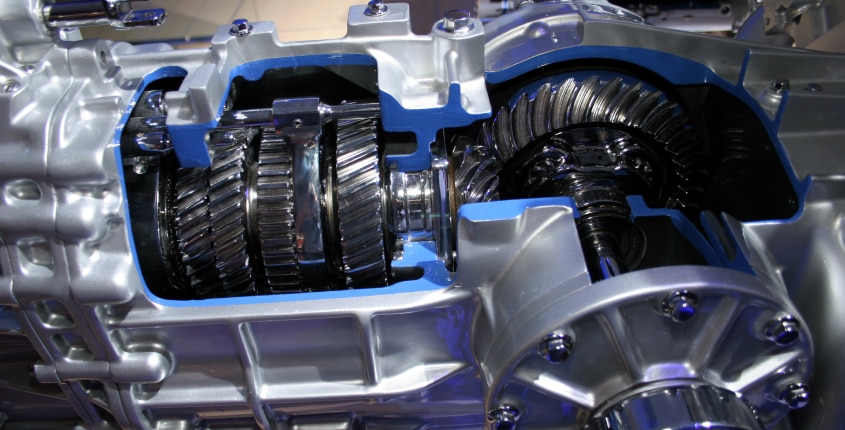
While all-wheel drive (AWD) and four wheel drive (4WD) used to be features limited to large trucks and SUVs, they’re now an option in virtually every car and van model.
So, what are AWD and 4WD? And why are they so popular?
Key Takeaways
- AWD: Best for on-road driving and variable weather. Automatic operation provides extra traction for rain, light snow and occasional off-road use. More fuel-efficient than 4WD.
- 4WD: Built for off-road and extreme conditions like mud, rocks and heavy snow. Manually engaged, offering maximum traction and durability but less fuel-efficient.
- Primary difference: AWD is automatic and ideal for daily use; 4WD is manual and excels in rugged terrain.
- How to choose: Go with AWD for paved roads and bad weather; 4WD for tough off-road adventures.
- Other considerations: Both systems require regular upkeep and slightly reduce fuel efficiency.
What is all-wheel drive?
Simply put, AWD systems can power both the front and rear wheels of a vehicle at the same time. This improves traction and control, especially on slippery surfaces, when compared to front- or rear-wheel drive. AWD generally operates in two ways:
- Full-time: All four wheels are powered continuously.
- Part-time: The vehicle mostly uses two-wheel drive but automatically engages the other two wheels when sensors detect a loss of traction.
How does all-wheel drive work?
Full-time and part-time AWD systems typically work without any additional input from the driver, making them perfect for varied driving conditions. The vehicle’s sensors determine how much power is needed at each wheel to maintain traction and adjust accordingly. There may be some settings available for changing how the system works in driving conditions like snow or mud, but these are optional.
What is four-wheel drive?
Four-Wheel Drive (4WD), or 4x4, is a system built for tough, off-road conditions. Unlike AWD, it usually needs to be manually engaged by the driver.
Here’s what you need to know about 4WD:
- Manual engagement: The driver typically activates 4WD using a lever, button or dial.
- Equal power distribution: When turned on, 4WD sends equal power to all four wheels.
- Maximum traction: It's designed to give you the best possible grip on difficult surfaces like mud, deep snow, sand and rocky trails.
- Low-range gearing: Many 4WD systems feature a low-range gear setting. This provides extra torque for climbing steep hills or tackling extreme off-road obstacles.
- Perfect for: Off-road adventurers who need maximum durability and control in challenging driving situations.
How does 4WD work?
Four-wheel drive operates by delivering power to all four wheels of a vehicle simultaneously, which significantly enhances traction and stability. The system typically relies on a transfer case, a critical component that splits power from the engine and distributes it to the front and rear axles. Many 4WD systems also include locking differentials, which ensure that power is evenly distributed between wheels on the same axle, even if one loses traction. Drivers can often switch between 4WD and 2WD modes, allowing for efficient performance on and off-road. Some modern vehicles are equipped with advanced, electronically controlled 4WD systems that automatically detect and adjust power delivery based on road conditions for optimal performance.
All-wheel drive vs. four-wheel drive
So, what is the difference between AWD and four-wheel drive (4WD)? Here’s a side-by-side look:
AWD vs. 4WD |
|
|---|---|
| Always on or self-activated with fully automatic adjustments | Driver controlled with selectable high- and low-range gearing |
| On-road driving (better for everyday use) | Off-road driving (better for extreme conditions) |
| Provides enhanced control in varying weather conditions | More suitable for extreme conditions, including heavy snow and deep mud |
| Uses a series of differentials, couplings, and/or clutches to distribute the power to all four wheels | Powered through front, rear and center differentials, transfer cases and couplings |
| More fuel efficient | Less fuel efficient |
| Usually not as heavy as 4WD | Usually heavier than AWD |
| Generally costs more than 4WD | Generally does not cost as much as AWD |
Do you need an AWD or 4WD vehicle?
Deciding between an AWD and a 4WD vehicle depends entirely on your driving habits and typical road conditions.
Who needs an AWD vehicle?
AWD is ideal for drivers who primarily stick to paved roads but encounter variable weather conditions from time to time. For instance, someone who lives in a city and commutes daily with occasional rain or light snow would typically do well with AWD, as a family that enjoys weekend trips to the mountains during ski season. The system automatically provides extra traction when needed, offering enhanced safety and stability on wet or slippery surfaces without requiring any driver input.
Who needs a 4WD vehicle?
4WD is built for more extreme, deliberate off-road use. This system is best for adventurers who tackle challenging terrains like deep mud, steep rocky trails or heavy snow. A construction worker navigating an undeveloped job site or an off-road enthusiast exploring remote backcountry trails would benefit from the robust, manually controlled power that 4WD provides. However, due to its weight and design, it's less fuel-efficient for everyday city driving.
Want help choosing the right vehicle for you?
With dealerships all over the country, our knowledgeable and local sales consultants are familiar with the varied conditions common in each location and will be happy to help find the right vehicle for you. Stop by and see us today to learn more about Enterprise Certified® used cars.

AWD FAQs
AWD improves traction in wet, snowy or slippery conditions and enhances stability during acceleration or cornering.
AWD can help maintain control in adverse conditions, but it does not shorten braking distances. Drivers still need to drive cautiously in poor weather.
Yes, when compared to 2WD vehicles. AWD helps prevent wheel slip by distributing power to the wheels with the most traction, improving grip on slick surfaces.
Yes, AWD systems generally reduce fuel efficiency slightly because they add weight and mechanical complexity.
AWD systems can require additional services (like differential or transfer case fluid changes), but most modern AWD systems are relatively low‑maintenance.
It depends. AWD can be beneficial for people who live in areas with frequent rain, snow or uneven terrain. For mostly dry climates, front‑wheel drive may be the more cost‑effective choice.
Most AWD systems cannot be manually turned off because they are designed to operate automatically. Some advanced systems may offer drive modes that alter how power is distributed.
AWD requires all four tires to match closely in tread depth and size. Uneven wear can stress the drivetrain, so rotating tires regularly is important.
AWD can typically handle a bit of light off‑roading, but it’s generally not as capable as 4WD systems which are designed for performance on rugged terrain.
AWD can help improve traction while towing, especially on slippery surfaces, but towing capacity is primarily determined by the vehicle’s engine and chassis.
4WD FAQs
4WD can provide superior traction on dirt, mud, rocks, snow and steep inclines, making it ideal for off‑roading, work vehicles and rugged terrain.
No. Some modern “full‑time” or “automatic” 4WD systems skip low‑range, but traditional off‑road‑focused trucks and SUVs typically include it.
Part‑time 4WD should not be used on dry pavement because it may cause drivetrain binding.
Full‑time and automatic 4WD systems, however are designed for use both on- and off-road.
Yes, 4WD can help with acceleration and traction in slippery conditions. However, like AWD, it does not improve braking, so drivers must still use caution.
Yes, 4WD systems add weight and mechanical complexity, which typically results in lower fuel economy compared to 2WD or AWD vehicles.
4WD vehicles often require additional maintenance, such as servicing the transfer case and multiple differentials. Regular inspections are especially important for off‑road users.
For serious off‑roading, rocks, deep mud and steep climbs, 4WD is strongly recommended. AWD vehicles can generally handle some light off‑roading but lack the torque and durability for harsher terrain.
4WD can improve traction while towing on slippery or uneven surfaces, but towing capacity depends more on the vehicle’s overall design than the 4WD system itself.